

The Upfront Carbon Reckoning Has Begun
By Jennifer Snyders, BScArch, CEO, House of Bamboo
NCC 2025 marks a turning point for specifiers. Here's what the shift to embodied carbon compliance means for your next project.
The National Construction Code (NCC) 2025 has arrived, and with it, a fundamental shift in the Australian building landscape. For architects and specifiers, this isn't just another update, it’s the introduction of upfront embodied carbon as a core compliance metric.
Historically, Section J has focused on operational energy, the power used to heat, cool, and light a building. But as our grid decarbonises, the focus is shifting to the upfront carbon locked in materials before the keys are even handed over. In 2026, we are seeing the transition from voluntary reporting to the mandatory standards expected in NCC 2028.
The Shift from Liability to Currency
In Queensland, this timeline is even tighter. The state’s 7-star residential energy rating (under QDC 4.1) demands a higher-performing building envelope. Architects now face a compliance gap: specifying for thermal performance while staying under tightening embodied carbon caps.
In Queensland, this timeline is even tighter. The state’s 7-star residential energy rating (under QDC 4.1) demands a higher-performing building envelope. Architects now face a compliance gap: specifying for thermal performance while staying under tightening embodied carbon caps.
Bamboo: The New Benchmark for Sequestration
Engineered bamboo - specifically laminated bamboo and bamboo scrimber, is no longer a specialty product. It is a high-performance, specification-ready alternative that directly supports the NABERS Embodied Carbon voluntary pathway now integrated into NCC 2025 for commercial buildings. Setting the stage for future mandatory standards, likely in 2028.

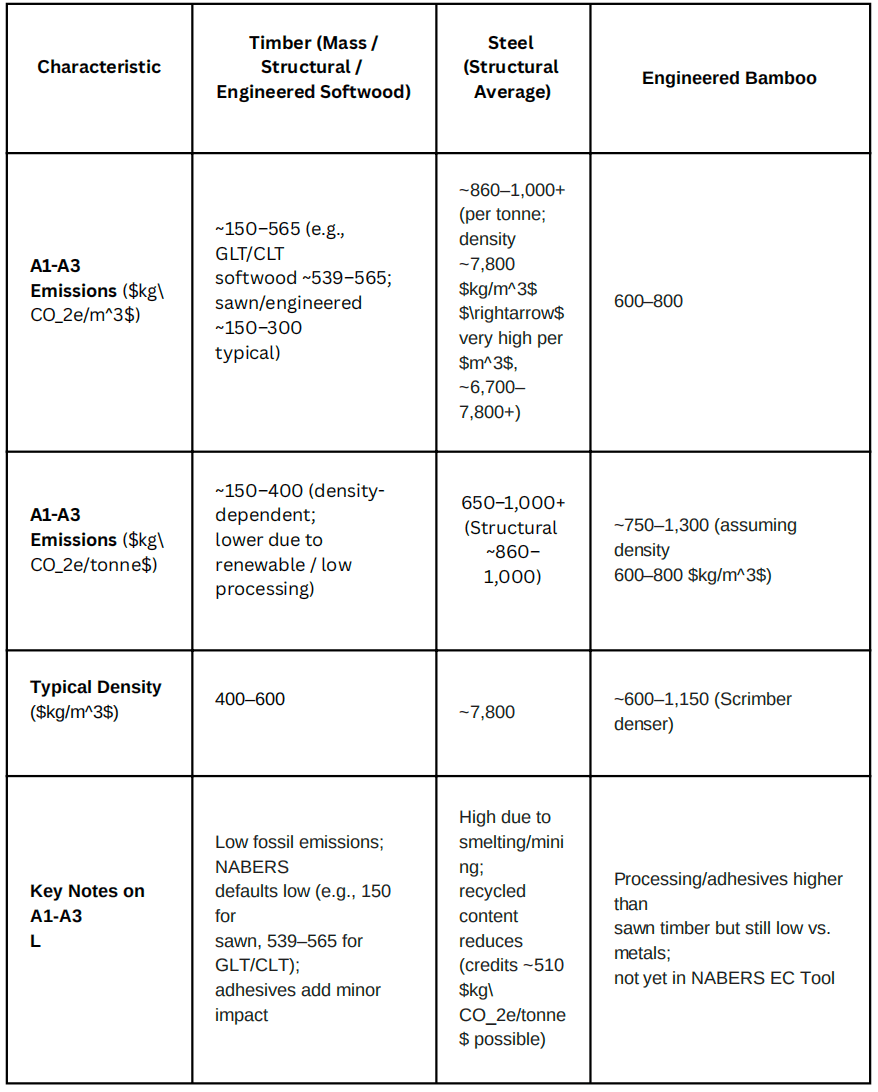
Embodied Carbon Comparison Table
(A1-A3, Cradle-to-Gate)
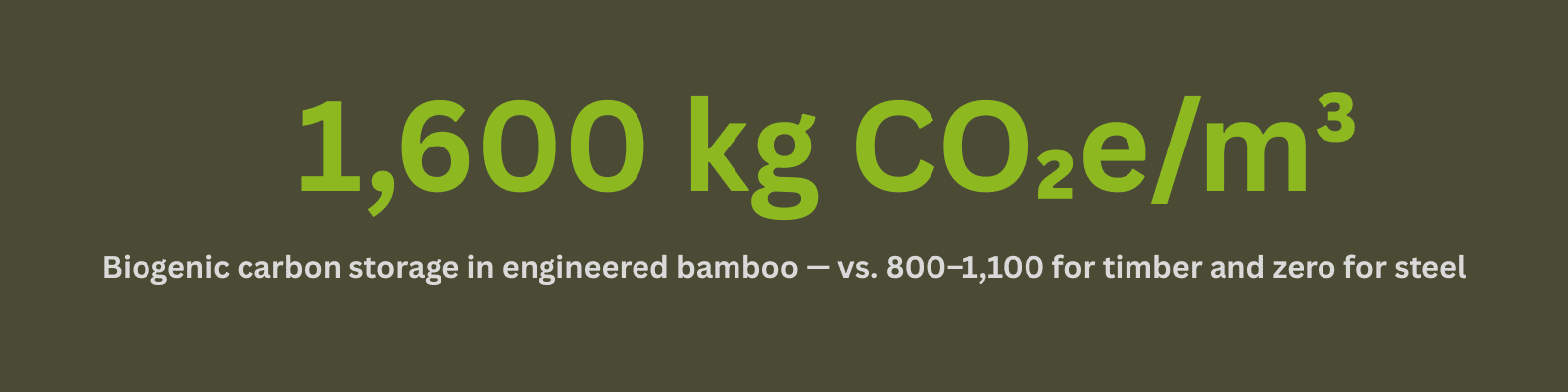
Carbon Sequestration Comparison Table
(Stored Biogenic Carbon)
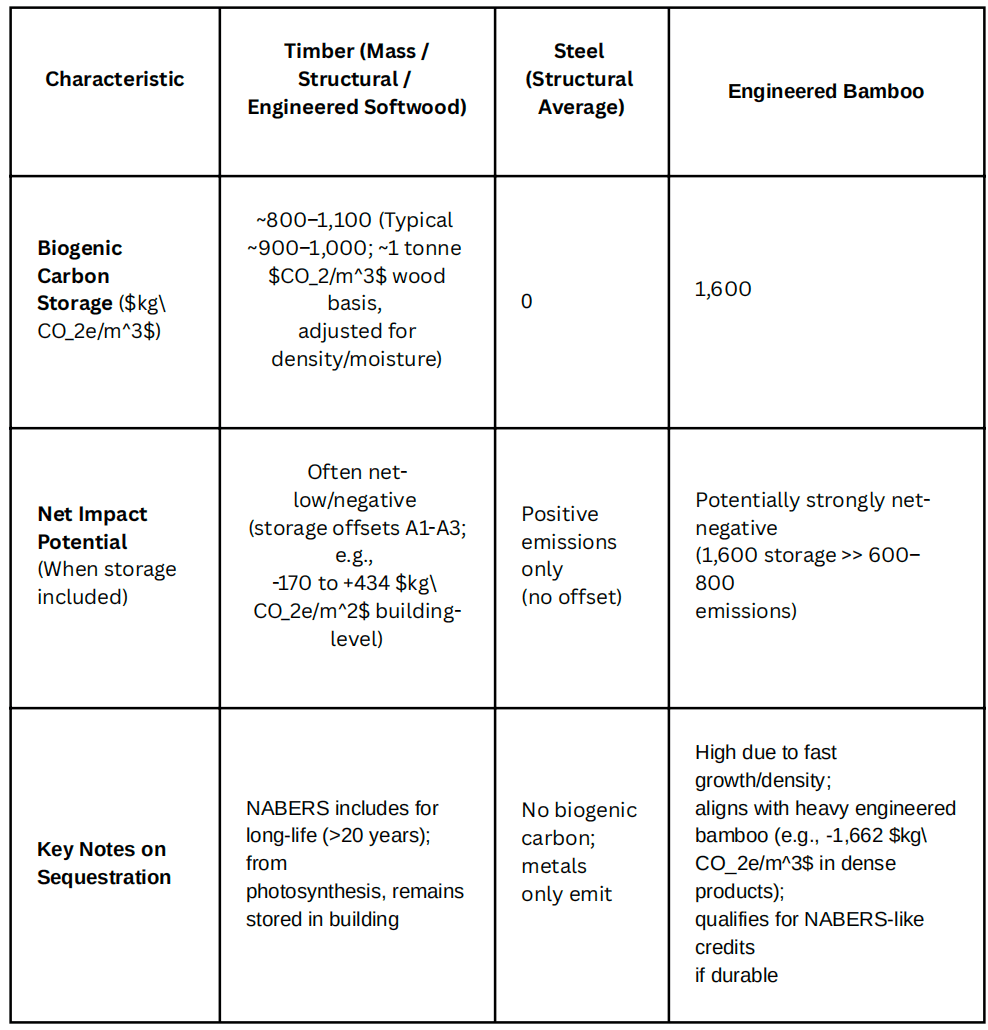
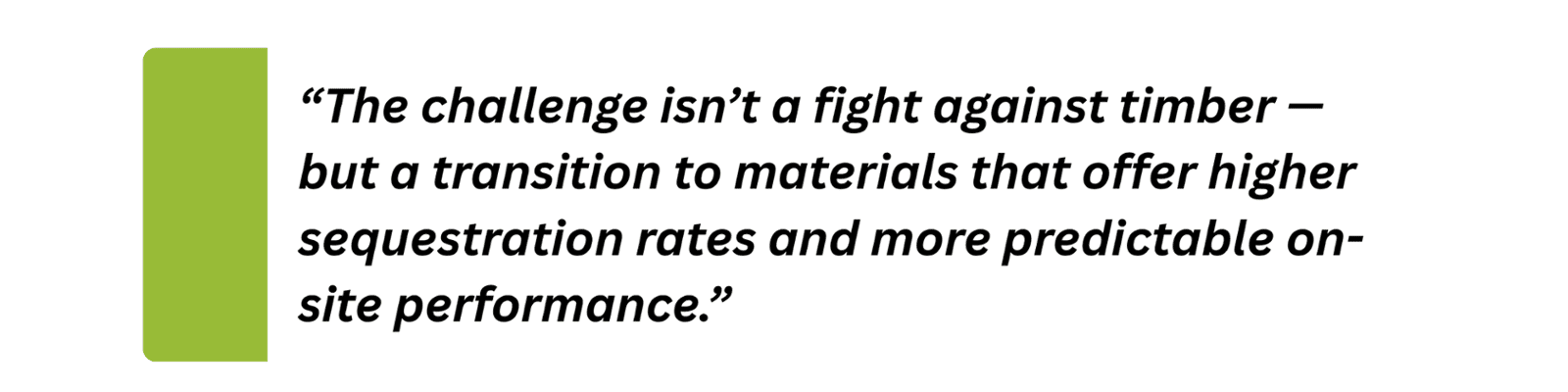
On a carbon-per-functional-unit basis, plantation bamboo completes five growth cycles in the time it takes one pine plantation to mature. This rapid turnover creates a continuous carbon sink that timber simply cannot match.
For a specifier, this means bamboo acts as carbon currency, offsetting other necessary but carbon-heavy elements like concrete footings or glazing.
Structural Performance & Fire Resistance
The Science of Sequestration: Beyond the 30-Year Cycle
The primary challenge with traditional softwood such as Pine is the time-value of carbon. While timber is a sustainable choice, a single rotation takes 25 to 50 years. In contrast, plantation bamboo, a giant grass, reaches structural maturity in just 3 to 5 years.
Dr. Mahmud Ashraf, a leading researcher at Deakin University, in the structural applications of bamboo, has highlighted that the rapid growth cycle allows for a much higher frequency of carbon "harvesting" from the same land footprint.
Prefabrication
The most significant risk to an architect’s carbon budget isn't the specification, it's the construction site. Engineered bamboo thrives in a prefabricated model. Elements like cladding panels, ceiling systems, and structural framing are factory-manufactured to exact specifications.
● Zero On-Site Waste:Factory precision ensures the carbon data on your EPD matches the finished building.
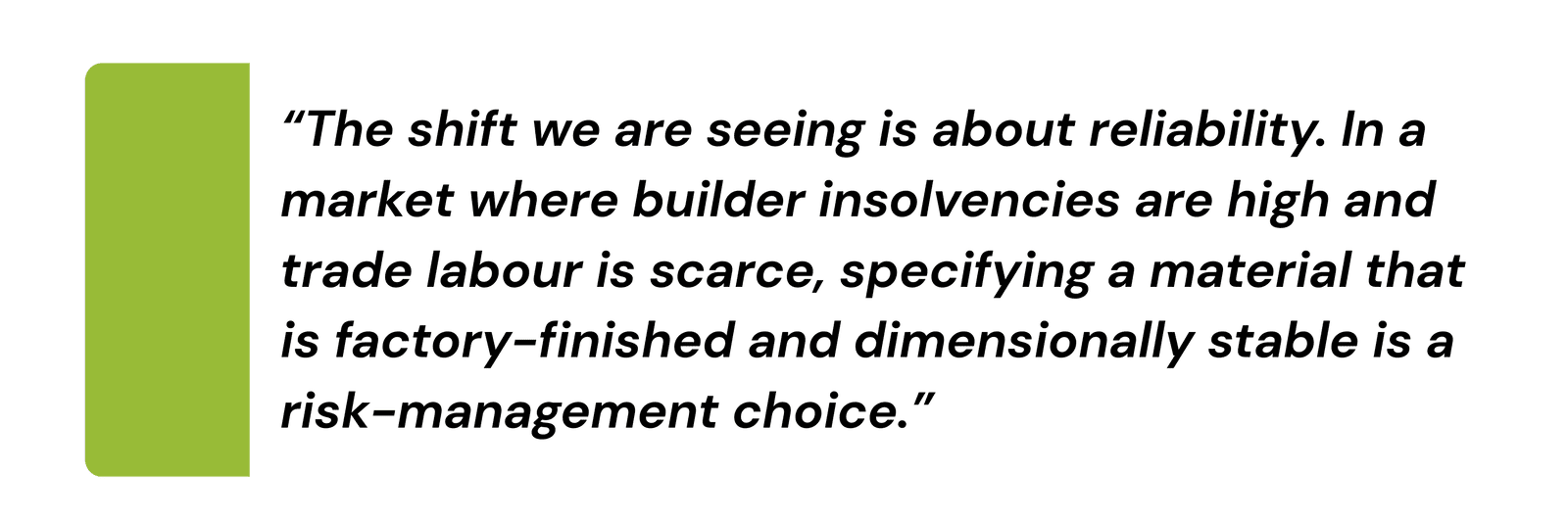
● Reduced Labour Dependency:With builder insolvencies reaching record highs in early 2026, reducing trade coordination on-site is a risk-mitigation strategy. Fewer touchpoints mean fewer opportunities for the supply chain, or the compliance trail, to fail.
A common hesitation with new materials is supply chain stability. However, bamboo does not suffer from the 30-year softwood plantation cycle or the "capacity crunch" affecting the steel industry.
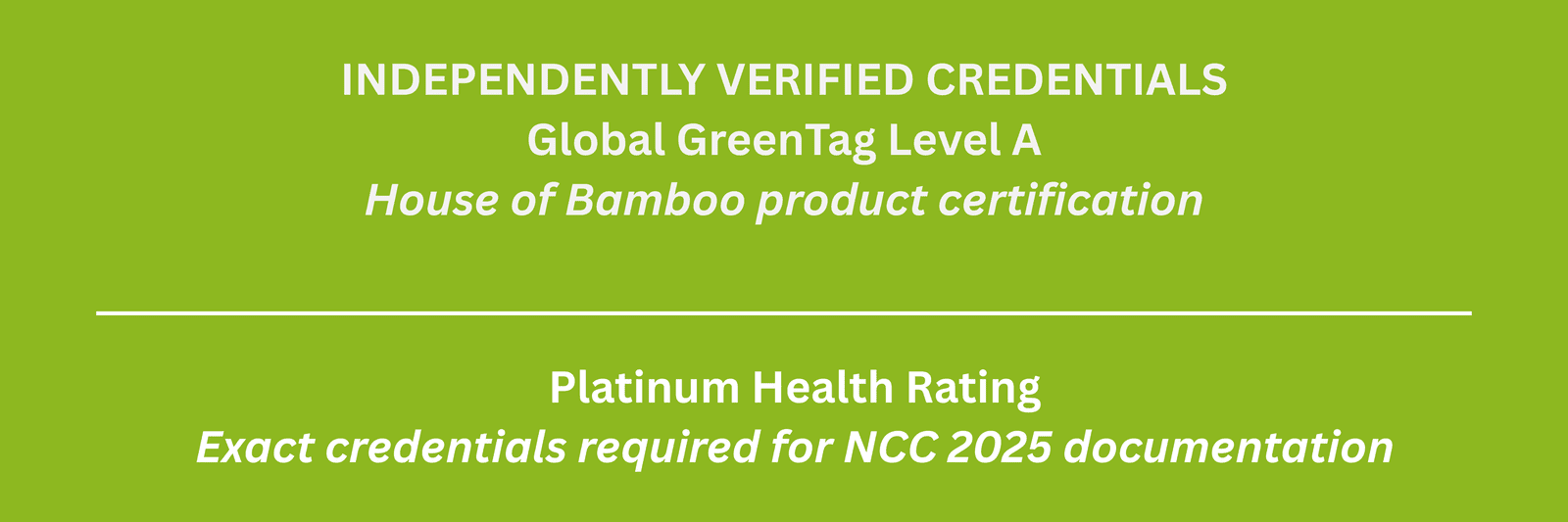
House of Bamboo has exclusive products that carry Global GreenTag Level A and Platinum Health Ratings, the exact independently verified credentials required for NCC 2025 documentation.
A Way Forward, Not a Fight
The NCC 2025 has opened a window; NCC 2028 will likely close it by making these low-carbon pathways mandatory. Building familiarity with engineered bamboo today isn't about rejecting traditional methods, it's about evolving your process to meet the new standard.
If you are working on a project in Queensland or under the new Section J pathways, ask yourself: "Is the default specification still the most compliant one?"
The NCC 2025 has opened a window; NCC 2028 will likely close it by making these low-carbon pathways mandatory. Building familiarity with engineered bamboo today isn't about rejecting traditional methods, it's about evolving your process to meet the new standard.
If you are working on a project in Queensland or under the new Section J pathways, ask yourself: "Is the default specification still the most compliant one?"